


Home

Services

About

Testimonials

Resources & Blog

Contact
Home
Services
About
Testimonials
Resources & Blog
Contact
06 January 2026
Ambient marketing is about thinking beyond the usual advertising placement.
Find the right place. Make the environment part of the idea. Give people a reason to notice.
Ambient advertising can generate 42% higher attention scores than conventional outdoor advertising.
Traditional advertising has its place, but sometimes the biggest challenge is simply getting people to notice it.
Ambient marketing takes advertising into unexpected places, using the surrounding environment as part of the campaign. Rather than placing a standard advertisement in a standard location, it finds a way to make the location itself part of the idea.
And that can make people look twice.
Ambient marketing works by putting messages in places people aren't used to seeing advertising.
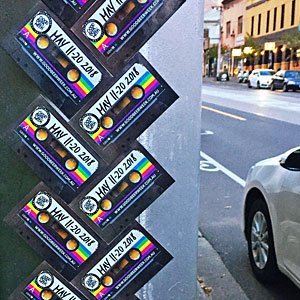
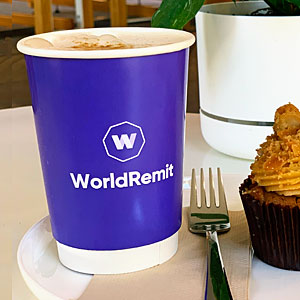
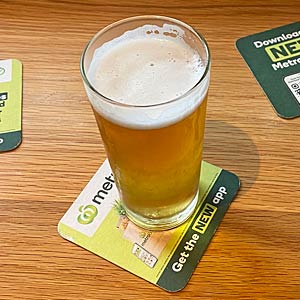
That could be a footpath, a coffee cup, a beer coaster, a building, a vehicle or another everyday environment.
The placement becomes part of the creative, giving people something different from the advertising they normally encounter.
Research comparing ambient and conventional outdoor advertising found that ambient advertising achieved around 42% higher average attention scores. It also recorded a 37% higher average score for attitude towards the advertisement.
The surroundings aren't just where the advertisement sits, they can become part of the idea.
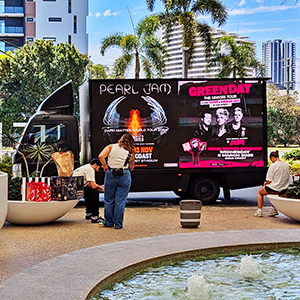
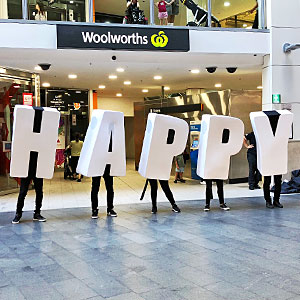
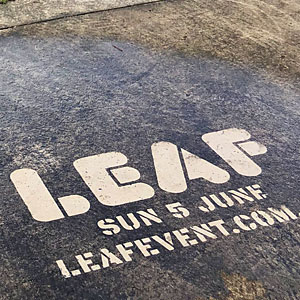
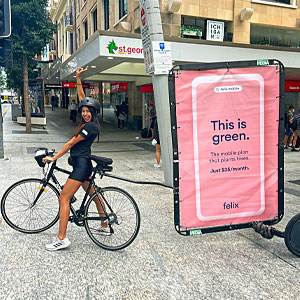
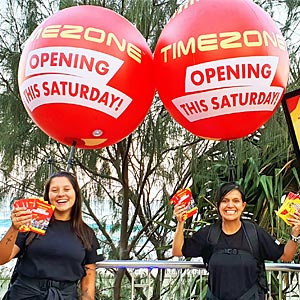
Brand messages with Coffee Cup Distribution travels with the consumer. A Street-Level Projection can use an existing building as its canvas. Chalk Stencils and Human Billboards can become part of the path people take every day.
This gives brands more opportunities to think about where a message appears, rather than simply what the message says.
Ambient marketing often relies on surprise.
There is a strong relationship between perceived surprise and attention towards ambient advertising.
Regarding people's reactions to ambient advertising, 59% read the advertising copy, while 69% went on to comment on the advertisement.
Sometimes the placement is what gets the message noticed.
Ambient marketing can put brands into the places people already spend time.
Walking to work. Getting coffee. Meeting friends. Heading to an event.
Instead of asking audiences to seek out the advertisement, the campaign infiltrates daily consumer environments they're already moving through.
A field experiment involving 2,464 passersby also found that surprising ambient media could generate positive attitudes, word of mouth, purchase intention and sales revenue.
Get Industry Insights and Campaign Examples straight to your inbox.
(1-2 emails per month)















All services and information are subject to change without notice. Data is collected from multiple sources and people should rely on their own investigations.
© Copyright Streetfighter Media Pty Ltd 2026